

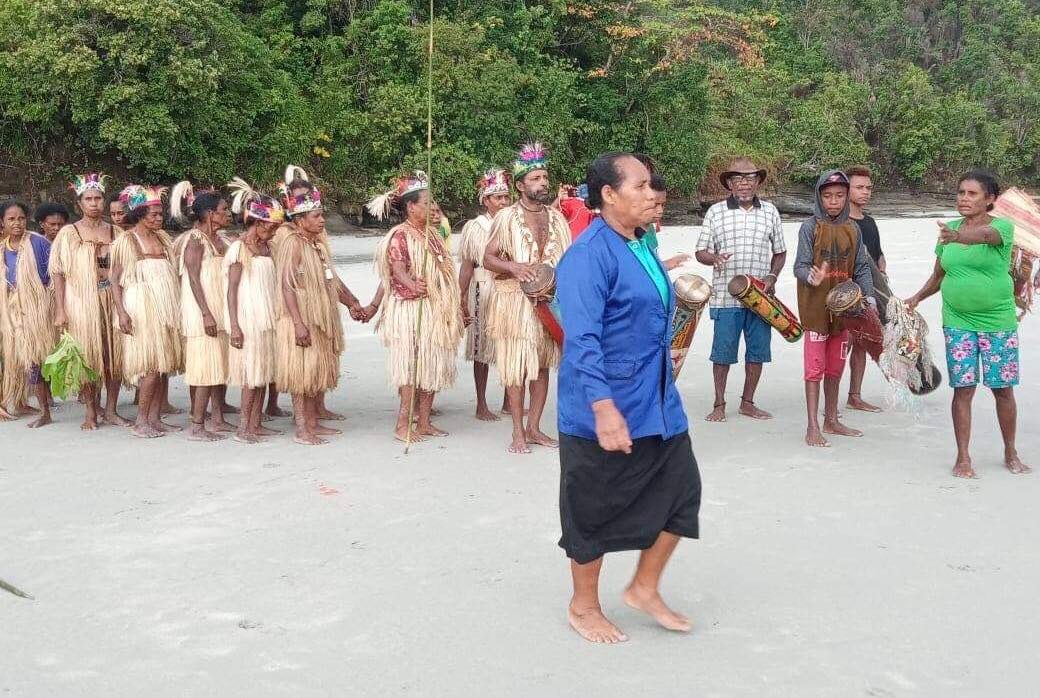

The Solidaritas Perempuan Melanesia is a group of West Papuan women who are fighting to promote the conscious rights of Melanesian women (indigenous West Papuans) and their children in West Papua. Today, at their rally, they spoke out strongly against the human rights violation in West Papua, and urging the Indonesian government to respect the cultural rights of the Melanesian people. They said that the peaceful aspirations of the West Papuan people – especially the mothers – will never be stopped by the Indonesian government. They also expressly rejected the so-called Indonesia’s special autonomy.
According to the voice of the majority of the people of West Papua, including the Melanesian Women’s Solidarity of West Papua, human rights violations against indigenous West Papuans continue to increase, including a number of homicides attributed to the launching of the so-called Indonesia’s special autonomy.
The West Papua Melanesian Women’s Solidarity group calls on the Indonesian government to immediately give the UN Human Rights Investigation Team and foreign journalists access to West Papua Melanesia.
The question they asked is why is Indonesia still closing Melanesian lands to the outside world anyway? What is the Indonesian government hiding from the outside world? That is one of the statements made during the Melanesian women’s solidarity gathering, and we know the answer.

Herman Wainggai
WPHRC, Washington, D.C.


